
Supporting Quiet and Sensitive Children in a Play-Based School
Quick Answer
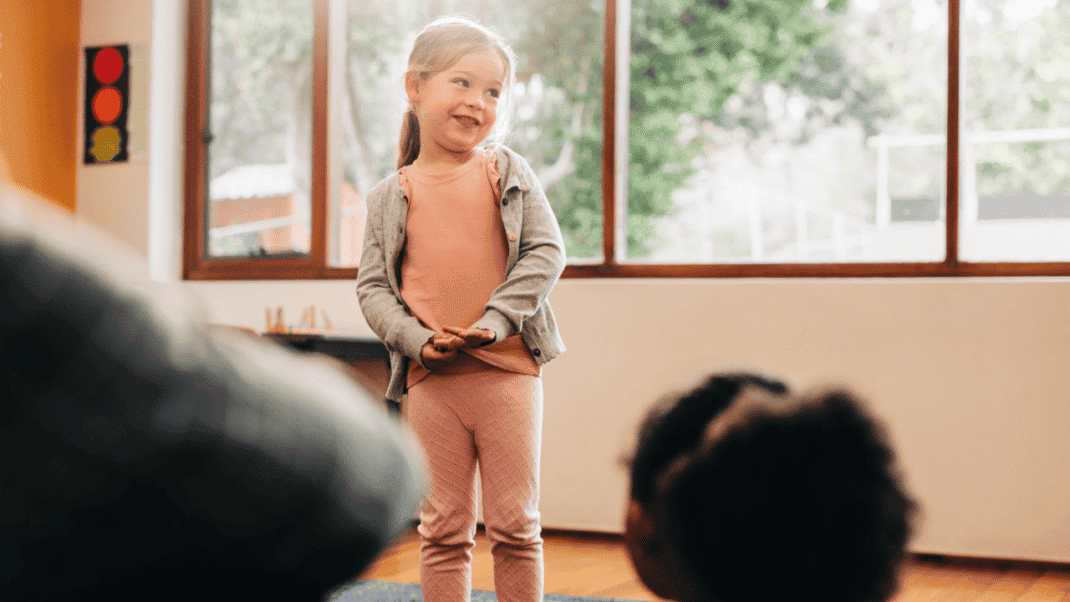
Play-based classrooms can help quiet and sensitive children feel comfortable by giving them time to observe, offering gentle invitations to play, and making room for breaks. Families can use similar approaches at home, especially during busy holiday gatherings.
Why Some Children Prefer to Watch Before Joining In
It’s morning drop-off, and your child stands beside you, quietly looking around the classroom. Other children are already building, talking, and playing. You might wonder, “Why isn’t my child joining them?”
For some children, watching is how they get comfortable. They may be noticing what the other children are doing, figuring out where they’d like to play, or taking time to adjust to a busy room.
In a play-based classroom, a teacher can respect that process while staying nearby. They might sit beside the child, start building with a few blocks, or offer a simple invitation: “Would you like to help me make a road?” There’s room to join when the child feels ready.
If you are exploring play-based programs in Georgia, Indiana, Iowa, Michigan or Nebraska, you may be wondering how a busy, playful classroom works for a child who likes to take things in first. Here is what that support can look like day to day.
Understanding Your Child’s Temperament
Children respond to new people and situations in different ways. Some jump right in, while others like to take their time. Being quiet or slow to warm up is not necessarily a sign that something is wrong.
Temperament can also change as children grow. A summary of that work from Jerome Kagan’s research group describes how some children who were especially cautious early in life became less inhibited by age five and a half.
The goal is to help children feel secure enough to explore and connect, at a pace that works for them.
How Play-Based Teachers Support Quiet and Sensitive Children
Play offers children different ways to connect with others, including ways that don’t require a lot of talking at first.
A quiet place to recharge
A NAEYC resource recommends a solitary-play area where children can spend some time on their own. A cozy corner with books or familiar materials can offer a break from a busy classroom before a child returns to group play.
Activities that make joining easier
Blocks, toy vehicles, and small-world play can help children interact side by side. One child might add a block to a friend’s building or drive a toy car along the same road. The shared activity creates opportunities for conversation without requiring a child to start one.
Partner puzzles and other simple activities can also give children a natural reason to cooperate, take turns, and share ideas.
Everyday conversations without pressure
Snack time, story time, and relaxed play give children chances to listen and contribute when they’re ready. A teacher might comment on something the child built or ask an easy question, without expecting an immediate answer.
Research also suggests that play and communication skills matter over time. A Norwegian study of 7,447 children found an association between stronger preschool language and social play skills and fewer later anxiety difficulties among children described as shy. The findings do not mean any one activity prevents anxiety, but they underscore the value of supportive play experiences.
5 Ways to Help Your Child Feel Comfortable at Holiday Gatherings
Family gatherings can be exciting, but a room full of relatives, unfamiliar sounds, and new routines may feel overwhelming to a child who warms up slowly. A little preparation can help.
1. Talk about what to expect
Tell your child who will be there, what you might do, and when you’ll head home. Knowing the plan can make a new situation feel more familiar.
2. Give them time to settle in
If possible, arrive before things get busy so your child can look around and get comfortable.
3. Offer a small job
Setting out napkins or passing out rolls gives your child a simple way to participate without having to jump into a conversation.
4. Find a quiet spot together
Show your child a comfortable place where they can read or take a break if the gathering starts to feel like too much.
5. Let greetings happen their way
A wave, a smile, or a quiet hello can be enough. If someone calls your child shy, you might say, “They like to look around first.” That describes what your child needs in the moment without making it a permanent label.
When to Check In With Your Child’s Teacher or Pediatrician
Many children need extra time in unfamiliar situations. If your child’s worries are becoming more intense or are making it difficult to attend school, play, or participate in everyday activities, talk with their pediatrician. Their teacher can share what they notice throughout the school day, too.
Frequently Asked Questions
Is it normal for a preschooler to be slow to warm up?
Yes. Some children naturally prefer to observe before joining a new activity or meeting someone new. With patient support and familiar routines, many become more comfortable over time.
How do play-based classrooms help shy children make friends?
Teachers offer inviting activities, such as blocks, toy vehicles, or partner puzzles, where children can play alongside each other. Gentle invitations make it easier to take the first step toward joining a friend.
Should I worry if my child watches more than plays at school?
Watching can be part of how a child learns about a new environment. Ask their teacher when they participate, what interests them, and whether they seem comfortable. If they’re consistently distressed, talk with their teacher and pediatrician.
How can I help my quiet child at holiday gatherings?
Explain the plan ahead of time, allow time to settle in, offer a small job, and identify somewhere quiet to take a break. Let your child greet relatives in a way that feels comfortable.
A Place to Feel Comfortable and Grow
Quiet children bring their own curiosity, ideas, and strengths to the classroom. With caring teachers and gentle opportunities to play, they can build friendships and confidence at their own pace.
Single-Location
At The Learning Grove Academy, we give children the time and space to explore, make friends, and feel comfortable joining in. We invite families in , to schedule a tour and see how our play-based classrooms support each child’s individual pace.
Multi-Location
At The Learning Grove Academy, we give children the time and space to explore, make friends, and feel comfortable joining in. We invite families in Georgia, Indiana, Iowa, Michigan and Nebraska to schedule a tour and see how our play-based classrooms support each child’s individual pace.
Related Posts
All Posts